The best age for a child to see an orthodontist is around age 7, according to the American Association of Orthodontists. At Modern Orthodontics, our specialists have welcomed young patients from Tribeca to Harlem to the Bronx for years, and we can tell you firsthand that this timing is not arbitrary. By age 7, most kids have a mix of baby teeth and permanent teeth, which gives an orthodontist enough to work with to spot problems with bite, spacing, or jaw growth long before those problems get bigger.
That said, an age 7 checkup rarely means braces that same year. For most families here in New York City, that first visit is simply a chance to catch potential concerns early and put a plan in place, whether that plan is to keep watching or to start guiding growth right away. Below, we walk through why this timing matters, what actually counts as too early, and what happens during that first consultation.
This Article Will Address
- Why age 7 is the recommended starting point for an orthodontic evaluation
- What these early evaluations are actually looking for
- Whether age 7 is really too soon to bring your child in
- What to expect during your child’s first orthodontic consultation
When Should a Child First See an Orthodontist?
A child should have their first orthodontic evaluation by age 7, even if their smile looks straight and their bite seems fine. Plenty of orthodontic issues hide in plain sight at this age. A child’s teeth can look perfectly aligned while an underlying bite problem or jaw growth issue is only visible on an exam or through imaging.
This is also the age when most children have a mix of baby teeth and incoming permanent teeth, sometimes called mixed dentition. That combination gives an orthodontist a much clearer picture of how a child’s jaw and bite are developing than waiting until every permanent tooth has come in. Some children should be seen even earlier than 7 if a parent or pediatric dentist notices something that seems off, and you do not need a referral from your family dentist to schedule that first visit yourself.
- Baby teeth lost unusually early or unusually late
- Difficulty biting or chewing food
- Mouth breathing or snoring
- Thumb sucking or pacifier use past age 4 or 5
- A jaw that shifts, clicks, or does not meet evenly when biting down
- Teeth that appear crowded, blocked out, or oddly spaced
If your child is already older than 7 and hasn’t been evaluated yet, don’t worry. It’s never too late to get a clear picture of what’s going on, and most orthodontic concerns can still be treated effectively well into the teen years.
Why Do Kids Need Orthodontic Evaluations?
Kids need orthodontic evaluations because a specialist can guide how the jaw and teeth grow, not just react to problems after they show up. An evaluation is about timing as much as it is about teeth.
Orthodontists complete two to three additional years of training beyond dental school, focused entirely on how teeth and jaws move and grow. At Modern Orthodontics, our doctors trained at Columbia University, NYU, Tufts University, and Montefiore Medical Center, and that specialty training is exactly why early evaluations matter so much. A general dentist can spot a possible issue, but an orthodontic specialist is trained to read the subtle signs of jaw growth and tooth eruption and decide whether action is needed now or later.
Catching a concern early can mean simpler, shorter treatment down the road. Guiding a narrow jaw or correcting a crossbite while a child is still growing is often easier than waiting until the jaw has finished developing. It can also mean avoiding more invasive procedures, like tooth extractions or jaw surgery, later in life. Early guidance can support better facial balance and a more stable bite over the long run, too. For busy families juggling school, activities, and everything in between, that trade-off matters: a short evaluation now can save a lot of time, money, and stress later.
Is Age 7 Too Early for an Orthodontist?
No, age 7 is not too early for an orthodontist. It is actually the age the American Association of Orthodontists specifically recommends for a first evaluation, precisely because it is early enough to catch developing issues while there is still time to act on them.
A common misconception is that seeing an orthodontist at 7 means a child will walk out with braces. In reality, most 7 year olds who come in for an evaluation do not need treatment yet. Many are simply monitored with a checkup every six to twelve months until their mouths are ready for the next step, whether that is early Phase 1 treatment or comprehensive treatment later as a teen. The point of the age 7 visit is information, not obligation. It gives parents a clear answer and a plan, rather than a guess, and it costs nothing to find that out since initial consultations are complimentary.
What Happens at a Child’s First Orthodontic Consultation?
At a child’s first orthodontic consultation, the orthodontist reviews their dental history, examines their teeth and bite, and explains whether monitoring or early treatment makes sense. The visit is designed to be calm, informative, and free of pressure.
At Modern Orthodontics, our team led by Dr. Maggie Romao, Dr. Kenneth Cooperman, and Dr. Talia Aboud walks every family through the same straightforward process, using digital scanning and AI-assisted treatment planning to get a precise picture of your child’s growth.
- A review of your child’s dental and medical history
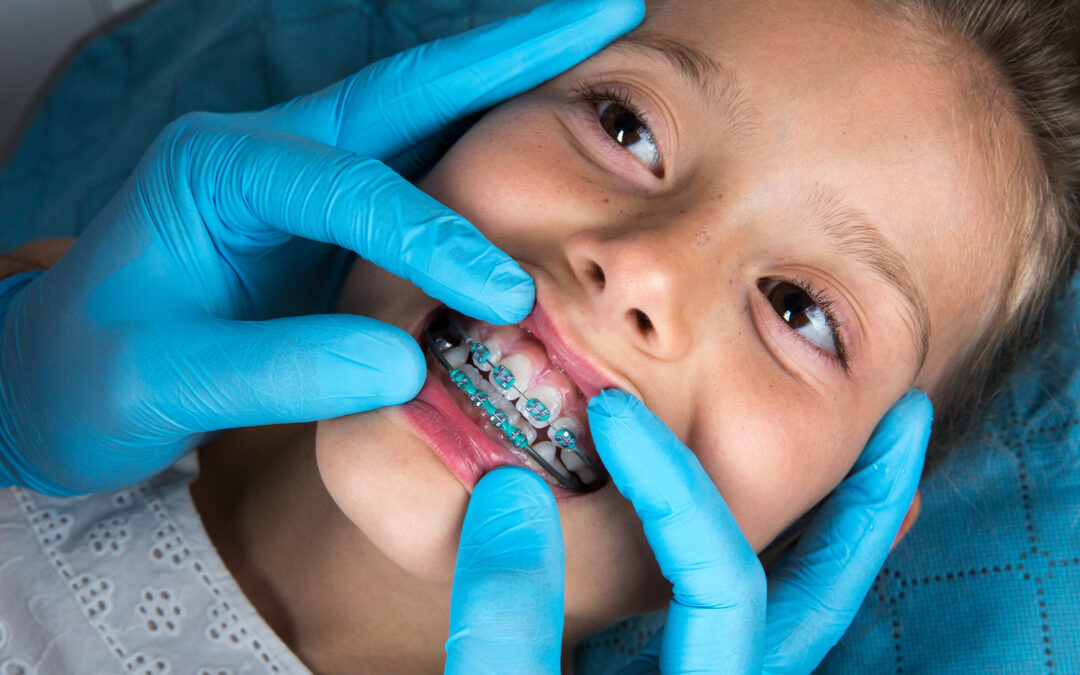
- A friendly, comfortable exam of the teeth, bite, and jaw
- Photos or advanced imaging, when needed, to see how permanent teeth and jaw growth are progressing
- A clear explanation of what the exam found, and whether that means watching, waiting, or starting early orthodontic treatment
- Plenty of time for you and your child to ask questions without feeling rushed
If treatment is not needed yet, you will leave with a monitoring plan and real peace of mind. If early guidance would help, your orthodontist will walk you through the options for orthodontic treatment and what to expect with either traditional braces or a clear aligner option like Invisalign, so nothing feels like a surprise.
Book Your Child’s Early Orthodontic Evaluation in New York City Today
There is no reason to guess about your child’s smile when a straightforward evaluation can give you real answers. Modern Orthodontics is currently welcoming new patients for early orthodontic care at our three New York City locations, and our team is ready to help families get started with confidence. Whether your child just turned 7 or you have noticed something that concerns you sooner, reach out to our Harlem office or any of our other locations to schedule a consultation. Call, text, or book online, and let’s make sure your child’s smile is on the right track from the start.
Sources
Harvard School of Dental Medicine – When Should Children First Visit the Orthodontist?

Dr. Maggie Romao
Born and raised in Brazil and a dual graduate of Columbia University (undergraduate and dental school), Dr. Romao completed her orthodontic specialty training at New York University in 2007. At Modern Orthodontics, she brings a warm, patient-centred approach to every smile transformation—drawing on her global background to connect with adults, teens and children alike. When she’s not helping patients achieve confident, healthy smiles, she enjoys life on the Upper West Side of New York with her three wonderful children.
Dr. Kenneth B. Cooperman
Dr. Cooperman earned his dental degree at Tufts University School of Dental Medicine in 1995 and went on to specialise in orthodontics at New York University in 2000. His career journey—from working with inmates in New Hampshire to his advanced training in multiple cities—reflects his commitment to precision, care and social responsibility. At Modern Orthodontics, he pairs technical expertise with a personable, transparent treatment style, ensuring each patient feels informed and supported. He lives on Manhattan’s Upper East Side with his family and their dogs, and brings that same sense of family-oriented care into the practice.