Most people who need orthodontic treatment are dealing with more than a crooked tooth or an unwanted gap. Crowding, misaligned bites, jaw discomfort, and trouble chewing or speaking are some of the most common reasons patients visit Modern Orthodontics in New York. A straighter smile is a welcome outcome, but the real driver behind most treatment plans is oral health and function.
Our team at Modern Orthodontics has trained at institutions including Columbia University, NYU, Tufts University, and Montefiore Medical Center, and we see patients of every age across our Tribeca, Harlem, and Bronx offices. Some patients come to us as children with early signs of crowding or a bite that does not line up correctly. Others arrive as adults who have lived with a shifting smile for years and are finally ready to address it. Whatever brings someone through the door, an orthodontic evaluation can clarify exactly what is happening and what it will take to correct it.
Recognizing why so many people end up in an orthodontist’s chair can help you know when it might be time for an evaluation, whether you are watching your child’s teeth come in, noticing your own bite has changed, or simply wondering if a straighter smile is worth the investment. Below, we walk through the most common problems we treat, how bite issues are addressed, why crowding is such a frequent concern, and when it makes sense to schedule that first visit.
Every evaluation at Modern Orthodontics includes advanced imaging and digital scanning, so we can see exactly how your teeth, jaw, and bite fit together before recommending a treatment plan. This kind of detail matters, because two people with what looks like the same crooked smile can have very different underlying causes and very different treatment needs.
This Article Will Address
- The dental and bite problems orthodontics can correct
- How treatment addresses overbites, underbites, and crossbites
- Why crowded teeth are one of the most common reasons for treatment
- When it makes sense to schedule an orthodontic evaluation
What Problems Can Orthodontics Fix?
Orthodontics can correct crowded or crooked teeth, misaligned bites, noticeable gaps between teeth, and jaw positioning issues that affect chewing, speech, or everyday comfort. These problems rarely resolve on their own, and in many cases they become more complicated to treat as a person gets older.
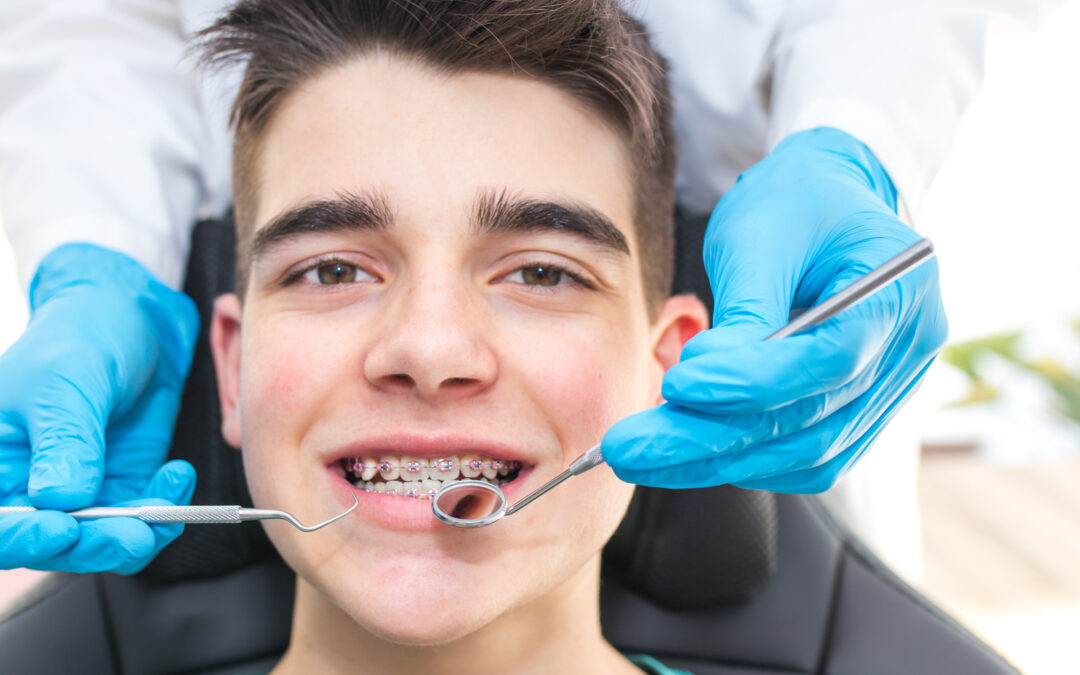
At Modern Orthodontics, treatment options include traditional braces, Invisalign clear aligners, and orthognathic surgery for more complex jaw discrepancies. Our orthodontic treatment plans start with a full evaluation of the bite, jaw alignment, and tooth position, not just how the smile looks in photos. Depending on age and the severity of the issue, some patients need straightforward tooth movement, while others benefit from a combination of braces and jaw guidance to reach a stable, comfortable result. These are among the most common reasons for orthodontic treatment we see across all of our New York offices.
Some patients also come to us with less obvious concerns, like a tooth that never fully erupted, teeth that overlap in the back where they are hard to see, or a jaw that clicks or feels tight when chewing. A thorough exam can catch these issues early, before they turn into bigger, more expensive problems.
Can Orthodontics Improve Bite Problems?
Yes. Orthodontic treatment is one of the most reliable ways to correct an overbite, underbite, or crossbite, because it gradually repositions teeth and, in growing patients, can help guide the jaw so the upper and lower teeth meet properly.
Left untreated, bite problems can cause uneven tooth wear, added strain on the jaw joint, and even chronic headaches or jaw discomfort. For most patients, braces or clear aligners are enough to correct these issues gradually over the course of treatment. When a bite discrepancy is severe, or the jaw has already finished growing, our orthodontists may recommend corrective jaw surgery alongside orthodontic treatment to fully align the bite and restore normal function.
Bite correction is not only about comfort. A properly aligned bite distributes chewing forces evenly, which protects tooth enamel and reduces the odds of needing fillings, crowns, or other restorative work later on. Patients who correct significant bite issues often notice they can chew more efficiently and speak more clearly almost immediately after treatment begins to take effect.
Because every bite is different, we tailor the pace and type of treatment to the individual, whether that means gentle tooth movement over a year or two, or a more involved plan that includes jaw surgery for a lasting result.
Can Orthodontics Help With Crowded Teeth?
Yes, crowding is one of the most common reasons people seek orthodontic care, and it responds well to braces, aligners, or a combination of expansion and gradual tooth movement.
Crowding happens when the jaw does not have enough room for every tooth to sit in its proper place, which can cause teeth to twist, overlap, or come in behind one another. Beyond the cosmetic impact, crowded teeth are harder to brush and floss thoroughly, which raises the risk of plaque buildup, cavities, tissue irritation and possible gum disease.
Correcting crowding earlier in life can sometimes mean a shorter and more straightforward treatment plan, since there is often more room to guide teeth into position while the jaw is still developing. That said, crowding can be treated successfully at nearly any age, and many adults choose Invisalign specifically because it addresses crowding discreetly while they continue with work and daily life.
Whichever approach fits best, the goal is the same: teeth that are easier to keep clean, a bite that works the way it should, and a smile you feel good about showing off.
When Should You See an Orthodontist?
Most children benefit from a first orthodontic evaluation by around age 7, though teens and adults can start treatment at any point once they notice crowding, bite problems, or discomfort.
An early evaluation does not necessarily mean early treatment. In many cases, it simply means monitoring how the jaw and teeth are developing so any concerns can be addressed at exactly the right time. Our early orthodontic care program is designed for this kind of proactive check-in, catching issues like crowding or bite misalignment while there is still room to guide growth.
There has recently been a focus in the scientific community about the benefits of using palatal expanders to assist with broadening of the airway. Many believe that the expansion of the palate and the associated increase in airway capacity can have a beneficial effect on breathing and sleep quality. Expanders are more effective in younger children than they are in older teens and adults; this is frequently something we evaluate the need for in our young patients.
For teens and adults, there is no cutoff. If you are noticing shifting teeth, a bite that feels off, jaw discomfort, or difficulty biting and chewing comfortably, that may be a sign that it is time to schedule a consultation. Many adults assume braces are only for children, but a meaningful share of our patients begin treatment well into adulthood, often to correct problems that were never addressed years earlier. As technology has changed, Invisalign has proven itself to be an effective treatment modality for many orthodontic issues that used to have to be addressed only through braces.
Schedule Your Orthodontic Consultation at Modern Orthodontics
If any of these signs sound familiar, the next step is a straightforward evaluation, not a guessing game. Modern Orthodontics is open and welcoming new patients at our Tribeca, Harlem, and Bronx offices throughout New York, and getting started is easy: call, text, or book a consultation online at whichever location is most convenient for you. Our team will walk you through exactly what is happening with your bite or alignment and what your treatment options look like from here. Whether this is your first orthodontic evaluation or you have been putting off treatment for years, there is no better time to find out what is really going on with your smile.
Sources

Dr. Maggie Romao
Born and raised in Brazil and a dual graduate of Columbia University (undergraduate and dental school), Dr. Romao completed her orthodontic specialty training at New York University in 2007. At Modern Orthodontics, she brings a warm, patient-centred approach to every smile transformation—drawing on her global background to connect with adults, teens and children alike. When she’s not helping patients achieve confident, healthy smiles, she enjoys life on the Upper West Side of New York with her three wonderful children.
Dr. Kenneth B. Cooperman
Dr. Cooperman earned his dental degree at Tufts University School of Dental Medicine in 1995 and went on to specialise in orthodontics at New York University in 2000. His career journey—from working with inmates in New Hampshire to his advanced training in multiple cities—reflects his commitment to precision, care and social responsibility. At Modern Orthodontics, he pairs technical expertise with a personable, transparent treatment style, ensuring each patient feels informed and supported. He lives on Manhattan’s Upper East Side with his family and their dogs, and brings that same sense of family-oriented care into the practice.