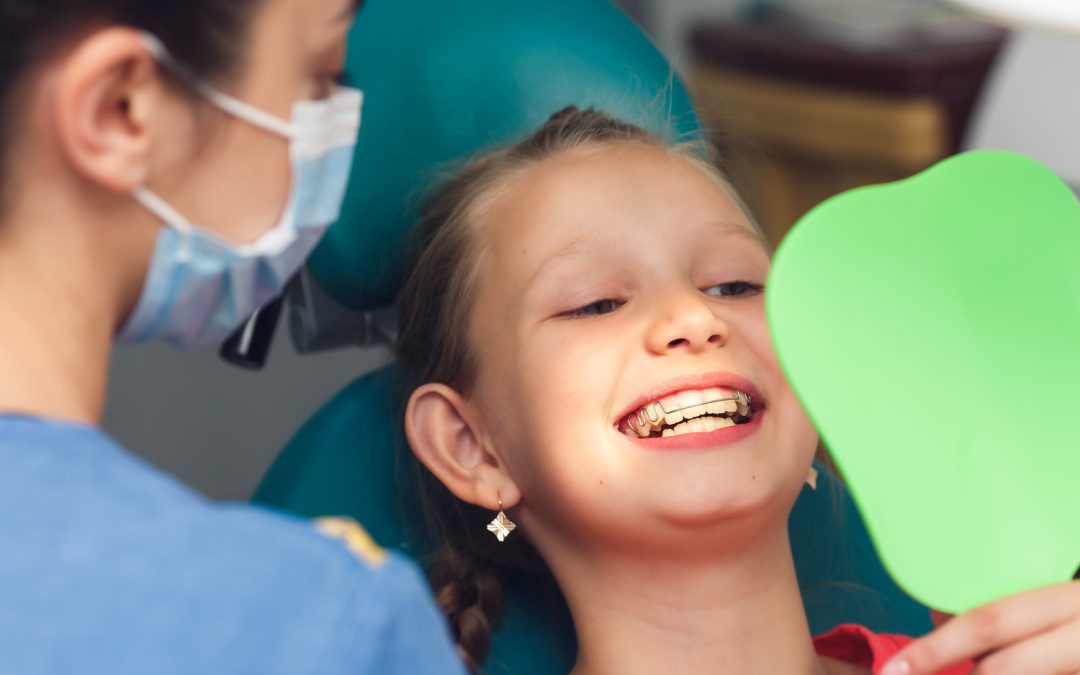
Many parents are surprised to learn that orthodontic care sometimes begins before all permanent teeth have erupted. Phase I orthodontics, also called early orthodontic treatment or interceptive orthodontics, focuses on guiding jaw development and correcting certain orthodontic concerns while children are still growing.
At Modern Orthodontics in New York City, we often evaluate children around age 7 to determine whether early treatment may benefit their developing smiles. By identifying orthodontic concerns early, our orthodontic specialists can guide jaw growth, create space for permanent teeth, and reduce the likelihood of more complex problems later.
Early orthodontic treatment does not mean a child will automatically need braces right away. In many cases, the goal is to guide growth and prevent future complications. With advanced imaging, digital scanning, and personalized treatment planning, our team helps families make informed decisions about orthodontic care for their children.
This Article Will Address
- What Phase I orthodontic treatment is and why it may be recommended for children
- When a child should first see an orthodontist
- What orthodontic problems early treatment can correct
- How long early orthodontic treatment usually lasts
- What appliances are used during Phase I orthodontics
- How early treatment can make future braces easier or shorter
- The benefits of early orthodontic care
- What parents can expect during treatment
- Signs that a child may benefit from early orthodontic evaluation
- Whether children who receive Phase I treatment will still need braces later
What Is Phase I Orthodontic Treatment?
Phase I orthodontic treatment is an early stage of orthodontic care designed to address developmental concerns in children. This phase typically takes place while a child still has a combination of baby teeth and permanent teeth.
Also called interceptive orthodontics, Phase I treatment focuses on guiding jaw growth, correcting bite problems, and creating enough space for permanent teeth to erupt properly.
During this stage, orthodontists may recommend treatment to:
- Guide proper jaw development
- Correct bite alignment issues
- Create space for incoming permanent teeth
- Reduce the risk of severe crowding
- Prevent orthodontic problems from worsening
Phase I orthodontics does not replace the need for braces later. Instead, it prepares the mouth for the next stage of development. Phase II treatment may occur later, once most or all permanent teeth have erupted, to refine tooth alignment and bite.
When Should a Child First See an Orthodontist?
The American Association of Orthodontists recommends that children receive their first orthodontic evaluation around age 7. At this stage, orthodontists can detect potential problems with jaw growth and tooth alignment, even if all permanent teeth have not yet appeared.
An early orthodontic evaluation allows specialists to monitor development and determine whether treatment is needed now or later.
Signs that may indicate a child should see an orthodontist include:
- Crowded or overlapping teeth
- Crossbite or underbite
- Protruding front teeth
- Difficulty chewing or biting
- Early or delayed loss of baby teeth
- Jaw growth concerns
Even if treatment is not necessary at the first visit, early monitoring allows orthodontists to identify the best time to begin care if it becomes necessary.
What Problems Can Early Orthodontic Treatment Correct?
Early orthodontic treatment can address a range of developing orthodontic issues in children. When these problems are identified early, orthodontists can guide jaw development and tooth eruption more effectively.
Common orthodontic concerns treated during Phase I include:
- Crossbite, both posterior and anterior
- Underbite
- Severe crowding
- Narrow upper jaw
- Jaw alignment problems
- Protruding front teeth
- Spacing problems
- Habit-related concerns such as thumb sucking
Correcting these problems during childhood can help guide proper dental development and reduce the complexity of orthodontic treatment later in life.
How Long Does Early Orthodontic Treatment Last?
Phase I orthodontic treatment typically lasts between 9 and 18 months, depending on the individual needs of the child.
The length of treatment can vary based on several factors:
- The child’s stage of growth and development
- The severity of the orthodontic issue
- The type of orthodontic appliance used
- How consistently treatment instructions are followed
After Phase I treatment is complete, children usually enter a monitoring phase. During this time, the orthodontist observes how the remaining permanent teeth erupt and how the jaw continues to grow. If additional orthodontic care is needed later, Phase II treatment may begin once the permanent teeth are fully developed.
What Appliances Are Used in Early Orthodontics?
Orthodontists use several types of appliances during Phase I treatment to guide jaw growth and improve tooth alignment.
Common appliances used in early orthodontic treatment include:
Palatal expanders
Palatal expanders widen the upper jaw to create additional space for permanent teeth. They are often used when a child has a narrow palate or crossbite.
Partial braces
In some cases, braces may be placed on selected teeth to guide their position while the jaw continues developing.
Space maintainers
If a baby tooth is lost too early, space maintainers help preserve the space needed for the permanent tooth to erupt correctly.
Habit appliances
These appliances help correct habits such as thumb sucking that may affect jaw development or tooth positioning.
Limited clear aligners
In certain cases, clear aligner systems designed for children may be used to address specific orthodontic concerns.
Each appliance is selected based on the child’s specific orthodontic needs and growth pattern.
How Does Early Orthodontic Treatment Make Future Braces Easier or Shorter?
One of the main advantages of Phase I orthodontics is that it can simplify future orthodontic treatment.
By addressing developmental concerns early, orthodontists can:
- Create adequate space for permanent teeth
- Guide jaw growth into a healthier position
- Reduce the severity of crowding
- Lower the likelihood of tooth extractions
- Decrease the need for complex orthodontic procedures
While early orthodontic treatment does not always eliminate the need for braces later, it often makes future treatment shorter and more predictable.
What Are the Benefits of Phase I Orthodontic Treatment?
Early orthodontic care offers several benefits for growing children.
Some of the most important advantages include:
- Improved jaw development
- Better bite alignment
- Reduced risk of trauma to protruding front teeth
- Improved facial balance and symmetry
- Simplified orthodontic treatment later
- Increased confidence as children grow
For many families, early orthodontic care provides peace of mind by addressing potential problems before they become more complex.
What Should Parents Expect During Early Orthodontic Treatment?
At Modern Orthodontics, early orthodontic treatment begins with a comprehensive consultation. During this visit, our orthodontic specialists evaluate your child’s teeth, bite, and jaw development.
The evaluation may include:
- Digital scans of the teeth and bite
- Advanced radiographic imaging for accurate diagnosis
- Photographs and orthodontic measurements
Based on this information, our orthodontists create a personalized treatment plan tailored to your child’s needs.
Throughout treatment, children visit the office periodically for adjustments and monitoring. These visits allow the orthodontist to ensure appliances are working properly and that jaw growth is progressing as expected.
Our offices in Tribeca, Harlem, and the Bronx use advanced orthodontic technology to make diagnosis and treatment planning more precise and comfortable for patients.
Signs Your Child May Benefit From Early Orthodontic Treatment
Parents often notice early signs that their child may benefit from orthodontic evaluation.
Common indicators include:
- Teeth that appear crowded or crooked
- Difficulty chewing or biting food
- Mouth breathing
- Thumb sucking habits
- Early loss of baby teeth
- Jaw shifting when opening or closing the mouth
If you notice these signs, scheduling an orthodontic consultation can help determine whether early treatment may be beneficial.
Why Choosing an Orthodontic Specialist Matters
Orthodontic treatment requires specialized training beyond general dentistry. Orthodontists complete additional years of advanced education focused on tooth movement, bite correction, and jaw development.
At Modern Orthodontics, our orthodontic specialists bring extensive training and experience to every treatment plan.
Our team includes orthodontists who trained at respected institutions such as:
- Columbia University
- New York University
- Tufts University
- Montefiore Medical Center
This specialized training allows us to provide accurate diagnoses, customized treatment plans, and long-term orthodontic solutions for patients of all ages.
Schedule a Phase I Orthodontic Consultation in New York City
Phase I orthodontics can play an important role in guiding healthy dental development for children. By identifying orthodontic concerns early, orthodontists can help prevent more complex issues later and create a strong foundation for future smiles.
Modern Orthodontics proudly provides orthodontic care for families throughout New York City, with convenient locations in Tribeca, Harlem, and the Bronx. Our team combines advanced orthodontic technology with personalized care to help children and adults achieve healthy, confident smiles.
If you are considering early orthodontic treatment for your child, we invite you to schedule a consultation with Modern Orthodontics. Our specialists will evaluate your child’s orthodontic development and help determine the most appropriate timing for treatment.
Sources

Dr. Maggie Romao
Born and raised in Brazil and a dual graduate of Columbia University (undergraduate and dental school), Dr. Romao completed her orthodontic specialty training at New York University in 2007. At Modern Orthodontics, she brings a warm, patient-centred approach to every smile transformation—drawing on her global background to connect with adults, teens and children alike. When she’s not helping patients achieve confident, healthy smiles, she enjoys life on the Upper West Side of New York with her three wonderful
Dr. Kenneth B. Cooperman
Dr. Cooperman earned his dental degree at Tufts University School of Dental Medicine in 1995 and went on to specialise in orthodontics at New York University in 2000. His career journey—from working with inmates in New Hampshire to his advanced training in multiple cities—reflects his commitment to precision, care and social responsibility. At Modern Orthodontics, he pairs technical expertise with a personable, transparent treatment style, ensuring each patient feels informed and supported. He lives on Manhattan’s Upper East Side with his family and their dogs, and brings that same sense of family-oriented care into the practice.